
Mobile Home Park Investments: Alternative Real Estate with Hard Money
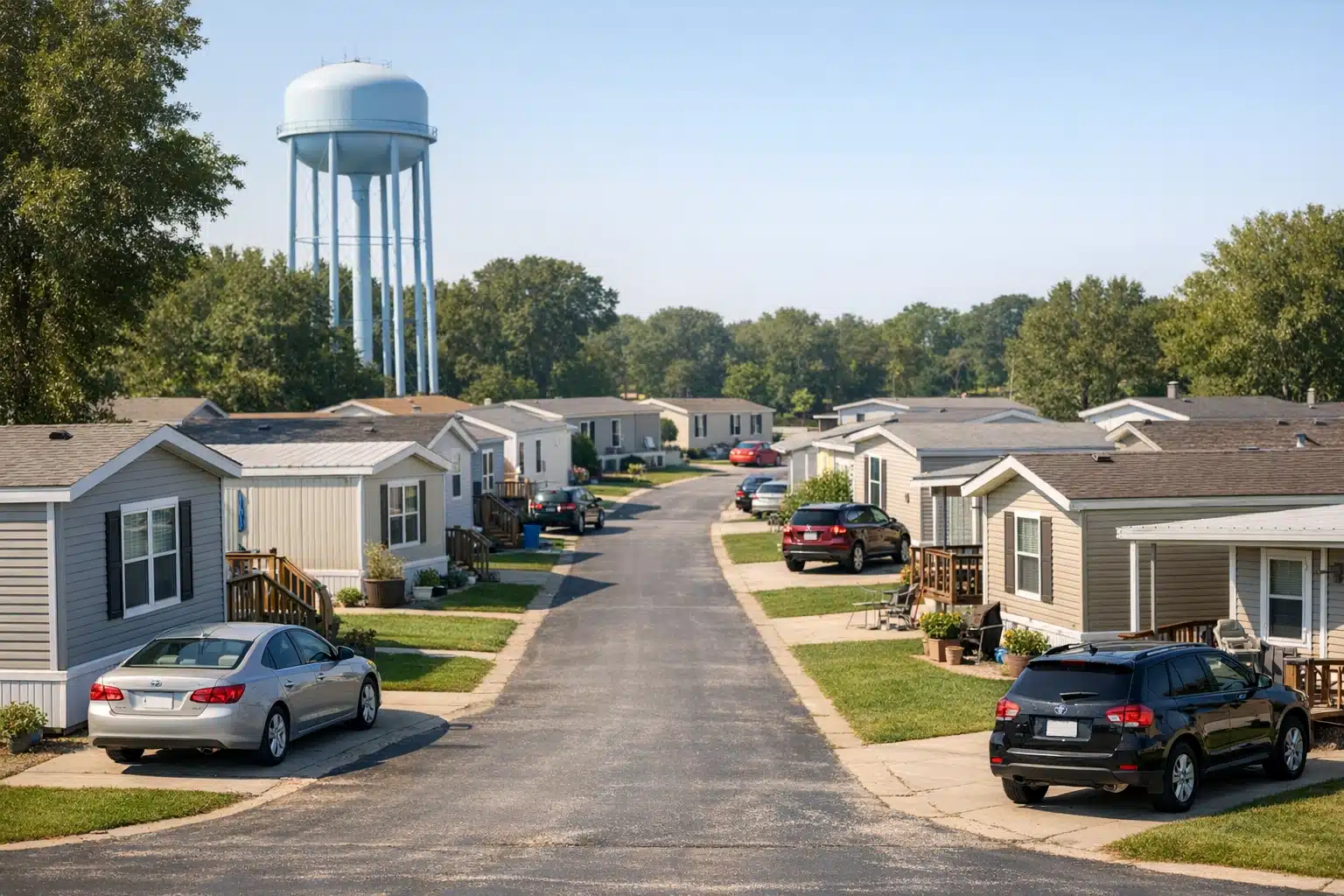
Mobile home parks offer a unique investment opportunity due to their steady cash flow and low tenant turnover, despite traditional lenders often avoiding them. Hard money loans provide a solution for investors looking to finance these properties quickly and effectively.
- Mobile home parks are increasingly in demand as new parks are rarely built, creating a fixed supply.
- Hard money financing allows for quick closings based on the park's value, bypassing traditional lender objections.
- Investors can capitalize on value-add strategies to increase income and appraised value, making refinancing easier.
Mobile home park investments involve purchasing and managing mobile home parks, which can provide consistent cash flow in real estate. Despite being overlooked by many lenders, these properties present unique opportunities for investors who are knowledgeable about financing options and can secure quick capital.
Mobile home parks generate some of the steadiest cash flow in real estate, yet most lenders treat them as odd assets they would rather avoid. That gap creates opportunity for investors who understand mobile home park financing and know where to find capital that moves fast.
Hard money fills the space that banks leave open. Below you will find how these loans work for parks, what deals qualify, and the specific numbers that make or break an acquisition.
Why Mobile Home Parks Are an Overlooked Asset Class
A mobile home park is land divided into rented lots where residents place their own manufactured homes. The park owner collects lot rent and controls common infrastructure like roads, water, and sewer.
This model produces low tenant turnover. Moving a manufactured home costs $5,000 to $10,000, so residents rarely leave over small rent changes.
That stickiness is the reason parks stay full during downturns. When affordable housing tightens, demand for lot rent climbs while supply shrinks.
Supply Keeps Falling
Almost no new parks get built. Local zoning boards resist approving them, and land near cities is worth more as retail or apartments.
The result is a fixed pool of parks with rising demand behind it. This is what makes mobile home parks a durable alternative real estate investment rather than a fad.
Why Banks Struggle With Mobile Home Park Financing
Traditional lenders hesitate on parks for reasons that have nothing to do with profitability. Their underwriting models were built for single-family homes and apartment buildings.
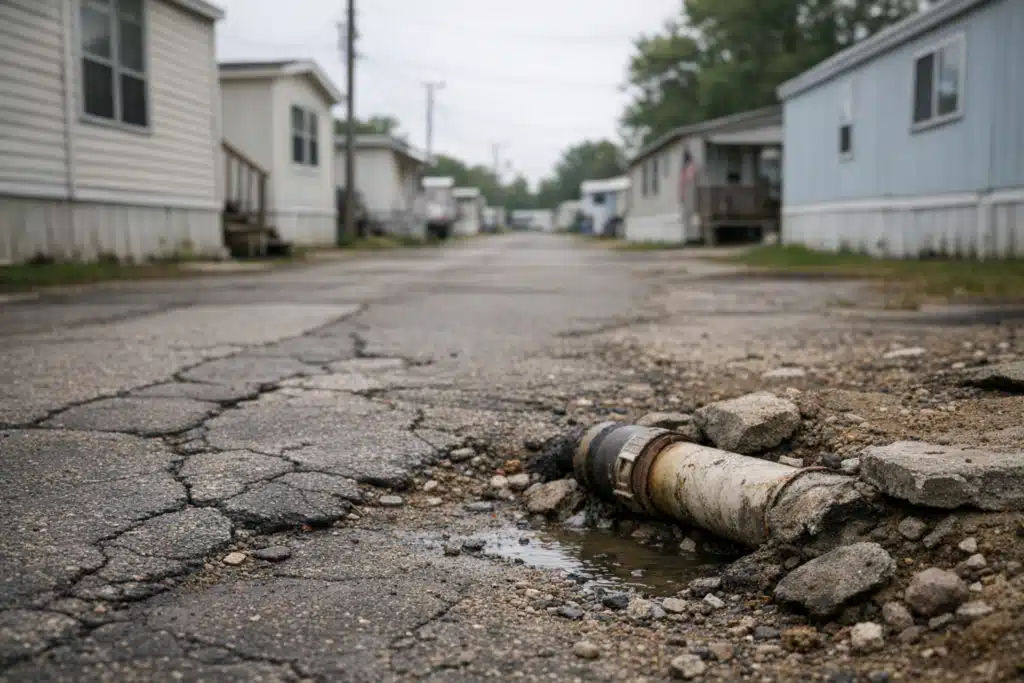
Common bank objections include:
- Private utilities: Well water or septic systems fall outside standard requirements.
- Park-owned homes: Lenders dislike mixing personal property with real estate collateral.
- Low occupancy: A park at 60% occupancy scares a bank but attracts value-add buyers.
- Deferred maintenance: Cracked roads and old sewer lines trigger automatic declines.
- Rural location: Many parks sit in counties banks refuse to lend in.
Each objection can kill a bank loan even when the numbers work. Hard money looks at the same park and asks a different question: what is this land and its income actually worth?
How Hard Money Mobile Home Park Financing Works
Hard money is asset-based lending secured by the property itself, not your tax returns. A private lender funds the deal based on the park’s value and upside.
Approval rests on three things:
- Current and stabilized value of the land and lots
- Your exit plan, whether refinance or sale
- The capital you bring to the closing table
Because the review skips years of personal financials, funding closes in days rather than months. That speed wins deals when a seller wants a quick, clean close.
Typical Loan Terms for Parks
Hard money terms for mobile home parks differ from bank products. Here is what buyers usually see:
- Loan-to-value: 60% to 70% of as-is value
- Term length: 12 to 36 months
- Rates: higher than banks, reflecting speed and flexibility
- Interest-only payments during the hold period
- Funding speed: often two to three weeks
The higher rate buys you time and access. Investors accept it because the return on a repositioned park dwarfs the interest cost.
A Real-World Deal Scenario
Numbers make this concrete. Take a 40-lot park priced at $1.2 million with 25 lots occupied.
Lot rent sits at $300 per month, below the $425 market rate nearby. The seller wants out and will not wait 90 days for a bank.
Here is how a hard money purchase might run:
- Purchase price: $1,200,000
- Hard money loan at 65% LTV: $780,000
- Buyer capital: roughly $420,000 plus closing costs
- Close time: 18 days
Over the next 18 months, the buyer raises rents to market and fills 10 empty lots. Income climbs from $90,000 to more than $190,000 per year.
That higher income raises the park’s value at a standard capitalization rate. The buyer then refinances into a bank loan, pays off the hard money, and keeps a stabilized asset.
Why the Exit Matters More Than the Rate
The hard money loan was never meant to stay. It was a tool to acquire and reposition a park no bank would touch on day one.
Once occupancy and income stabilize, the same bank that declined the purchase happily refinances it. The interest paid during those 18 months was the cost of a deal that never would have happened otherwise.
Value-Add Strategies That Justify Hard Money
Hard money makes sense when a park has clear upside you can capture quickly. The most reliable levers include:
- Raising below-market lot rents to match nearby parks
- Filling vacant lots with new or moved-in homes
- Billing back utilities to residents instead of eating the cost
- Converting park-owned homes to tenant-owned to cut repair liability
- Cleaning up management to reduce delinquency and turnover
Each move raises net operating income. Higher income means a higher appraised value and an easier refinance exit.
Risks Investors Should Weigh
Parks reward buyers who respect the details. Ignoring the physical plant is the fastest way to lose money.
Watch these risk points before you sign:
- Private sewer and water: Failing systems can cost six figures to replace.
- Master-metered utilities: You pay the full bill until you sub-meter.
- Aging homes: Park-owned units become repair sinkholes.
- Rent restrictions: Some states cap increases or require relocation payments.
- Refinance risk: If income does not rise, the exit stalls.
A hard money lender who knows parks will flag these issues before closing. That input protects both sides of the loan.
Who Should Use Hard Money for Parks
This financing fits specific buyers, not everyone. It works best for investors who match one of these profiles:
- You found a park priced below market and need to close fast.
- The property has low occupancy or deferred maintenance a bank rejects.
- You have a clear plan to raise income within 12 to 24 months.
- You hold enough capital for the down payment and reserves.
If you plan to buy and hold a stabilized, fully occupied park with no upside, a bank loan costs less. Hard money earns its rate on deals that need speed or repositioning.
Key Takeaways
Mobile home parks pair steady demand with shrinking supply, making them a durable alternative real estate investment. Hard money mobile home park financing closes the deals banks reject, then hands off to a refinance once income stabilizes.
The strategy hinges on a real value-add plan and a clean exit, not on cheap interest.
Apex Money Lending Group funds mobile home park acquisitions that traditional lenders pass on. Call or text 720‑365‑4344, email info@apexmoneylending.com, or visit https://apexmoneylending.com to review your deal.
Sources
- U.S. Census Bureau – Manufactured Housing Survey
- Consumer Financial Protection Bureau – Manufactured Housing Finance: New Insights from HMDA
- U.S. Department of Housing and Urban Development – Manufactured Housing Programs

