
Wildfire Risk and Property Insurance: What Colorado Investors Must Know This Summer
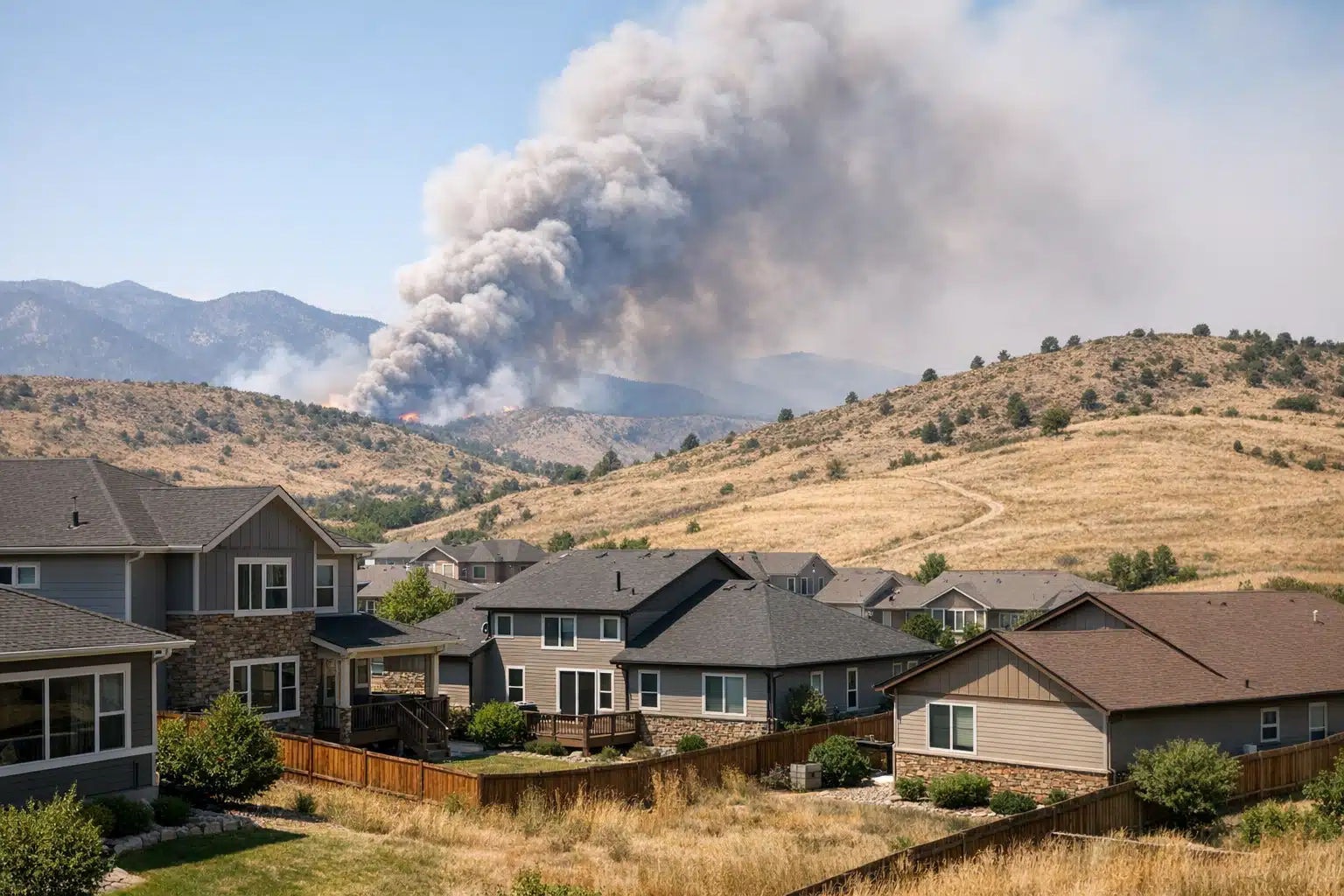
Colorado investors need to be aware that wildfire property insurance can be abruptly halted during the summer months, which may jeopardize real estate transactions. This guide outlines the unique challenges posed by wildfire risks and offers strategies to secure insurance and funding.
- Insurance binders can be lost overnight if a fire ignites nearby, affecting closings. Investors must act quickly to secure coverage before the peak fire season.
- During summer, carriers impose stricter requirements for investment properties, including defensible space verification and recent inspections.
- To mitigate risks, investors should bind coverage early, have backup carriers, and avoid closing during Red Flag Warnings.
In Colorado, wildfire risk can significantly affect property insurance, as insurers may suspend new policies during active fire events. This means that a property under contract could lose its insurance binder unexpectedly if a fire ignites nearby, potentially jeopardizing the closing process.
A property under contract in Boulder County can lose its insurance binder overnight when a fire starts 40 miles away. Colorado carriers pause new policies during active fire events, and that pause can kill your closing.
This post covers what Colorado wildfire property insurance means for real estate investors between June and September. You will learn why summer changes the rules, what lenders require, and how to keep a deal alive when carriers freeze binding.
The stakes are concrete. No insurance binder means no funding, and a delayed close can trigger penalties or a dead contract.
Why Summer Changes Colorado Wildfire Property Insurance
Colorado wildfire property insurance behaves differently from May through October. Carriers use satellite fire mapping and real-time perimeter data to decide when to stop writing policies in a given ZIP code.
When a fire ignites near a property, insurers issue what is called a moratorium. A moratorium is a temporary halt on binding new coverage inside a defined radius of active flames.
These halts can appear with less than 24 hours of notice. An investor who assumed coverage was routine can find every carrier closed to new business in that county.
The 2021 Marshall Fire Precedent
The Marshall Fire in December 2021 destroyed over 1,000 structures in Boulder County. It reshaped how carriers price and bind coverage across the Front Range.
After that event, several national insurers reduced new-policy volume in Colorado wildfire zones. Investors now face fewer carriers and stricter inspection demands during fire months.
Summer-Specific Timing Traps
The peak binding-freeze window runs from late June through early September. Deals scheduled to close in this window carry the highest risk of an insurance interruption.
- July 4 weekend fires: Fireworks-triggered ignitions spike moratorium activity.
- Dry lightning events: August storms start multiple fires at once, freezing several counties.
- Red Flag Warning days: Some carriers pause bindings preemptively when the National Weather Service issues these alerts.
Investment Property Insurance Requirements During Fire Season
Investment property insurance requirements grow stricter between June and September in Colorado. Lenders and carriers add conditions that do not apply in winter months.

An investor buying a rental in Larimer or El Paso County should plan for extra documentation. Skipping this step risks a last-minute funding hold.
What Carriers Demand Now
- Defensible space verification: Photos showing cleared vegetation within 30 to 100 feet of the structure.
- Roof material proof: Class A fire-rated roofing documentation, often required for coverage in foothill zones.
- Wildfire risk score: Many carriers pull a property-specific score before quoting a rate.
- Recent inspection: An exterior inspection dated within the current fire season.
How Lending Ties to Coverage
Lenders require an active insurance binder before releasing funds. A binder is written proof that coverage takes effect on the closing date.
During a moratorium, carriers refuse to issue that binder. Without it, funding stops regardless of how ready the rest of the file is.
At Apex Money Lending Group, we structure timelines around this reality. We flag high-risk close dates early and build contingency room into the schedule.
How to Protect a Deal From a Wildfire Moratorium
Investors can reduce moratorium risk with early action and backup carriers. The steps below reflect how experienced Colorado investors keep summer deals funded.
- Bind coverage early. Lock a policy the moment you go under contract, not the week of closing.
- Line up two carriers. If one freezes, the second may still be open in that ZIP code.
- Check active fire maps. Review InciWeb and state fire dashboards before setting a close date.
- Avoid closing during Red Flag Warnings. Move the date if a warning is forecast.
- Confirm the binder in writing. Get the effective date documented days before funding.
What Happens If a Moratorium Hits Mid-Escrow
A moratorium during escrow does not always kill the deal. Coverage bound before the fire started usually remains valid.
The problem arises when no binder exists yet. In that case, closing must wait until the carrier lifts the freeze, which can take days or weeks.
Extension addendums can hold the contract together during a wait. We help investors negotiate these before a fire forces the issue.
Cost Realities for Colorado Wildfire Property Insurance
Premiums for wildfire-exposed properties have climbed across the Front Range and mountain counties. Some foothill rentals now cost two to three times more to insure than comparable plains properties.
Investors underwriting summer purchases should build these figures into their numbers early:
- Higher deductibles: Wildfire-zone policies frequently carry separate, larger deductibles.
- FAIR Plan fallback: Colorado launched a FAIR Plan for owners who cannot find standard coverage.
- Coverage gaps: Some policies cap or exclude certain wildfire-related losses.
The FAIR Plan as a Backstop
The Colorado FAIR Plan is a state-created option for hard-to-insure properties. It provides basic coverage when the standard market declines a risk.
FAIR Plan policies cost more and cover less than standard policies. Treat it as a fallback, not a first choice, and factor its limits into your returns.
Building Insurance Into Your Summer Lending Timeline
The smartest Colorado investors treat insurance as a scheduling variable, not an afterthought. A summer close needs a wider buffer than a winter one.
We recommend adding at least seven extra days to any close date between July and September. That cushion absorbs a short moratorium without breaking the contract.
When you work with a lender that understands fire-season timing, funding stays on track. Apex Money Lending Group aligns loan schedules with real-time wildfire conditions across Colorado.
Key Takeaways
Colorado wildfire property insurance can freeze without warning during summer, halting binders and stalling closings. Bind coverage early, keep a backup carrier, and avoid closing during active fires or Red Flag Warnings.
Investment property insurance requirements tighten from June to September, so plan for inspections, roof documentation, and defensible-space proof. Ready to fund a Colorado investment property before fire season peaks? Call or text Apex Money Lending Group at 720‑365‑4344, email info@apexmoneylending.com, or visit https://apexmoneylending.com.
Sources
- Colorado Division of Insurance – Wildfire and Property Insurance Resources
- InciWeb – Incident Information System
- Insurance Information Institute – Facts + Statistics: Wildfires
- National Weather Service – Wildfire Safety and Red Flag Warnings

