
Accessory Dwelling Units (ADUs): Financing a Backyard Rental in Colorado
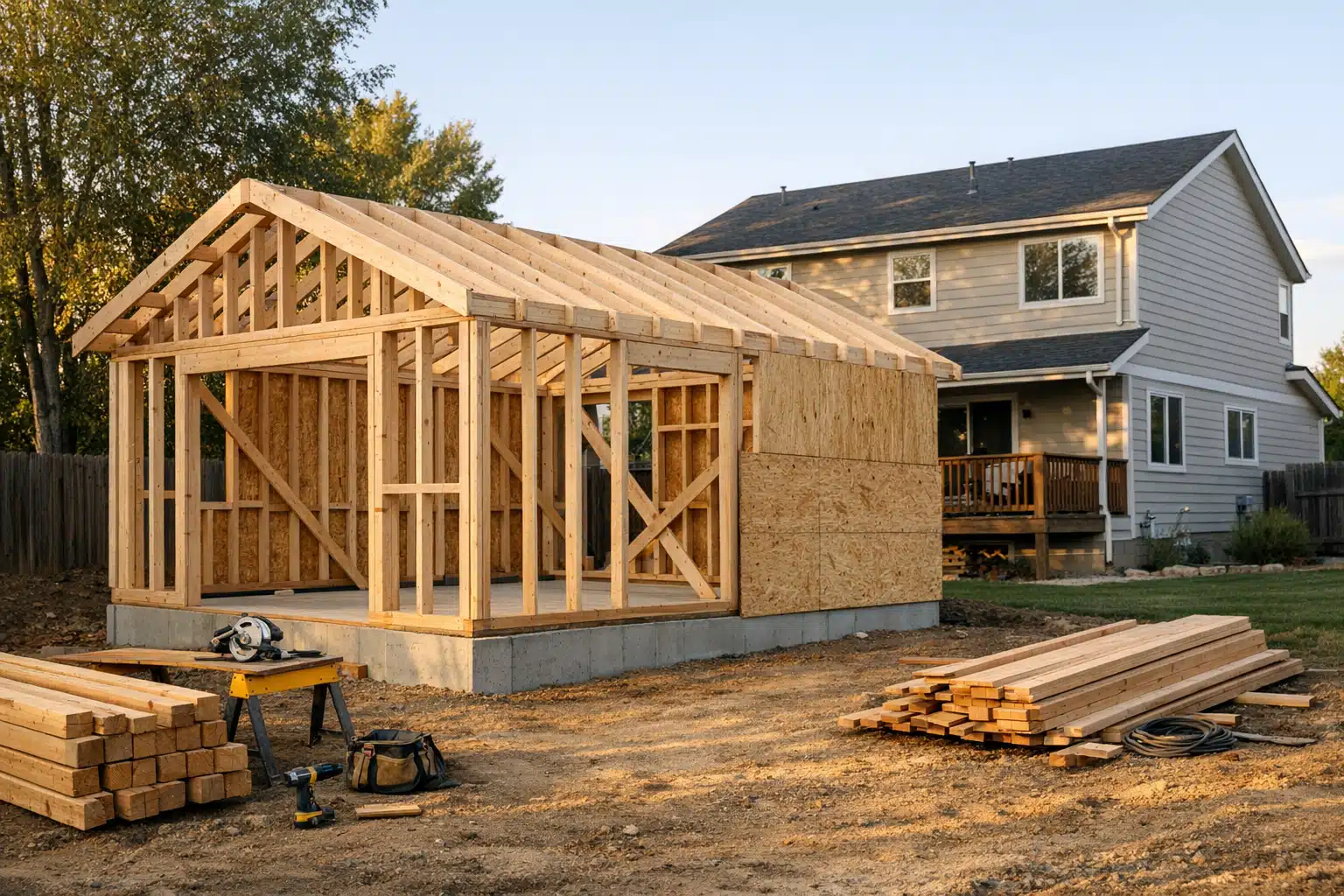
In 2024, Colorado enacted a law allowing accessory dwelling units (ADUs) on single-family lots, providing homeowners with new opportunities for rental income. This change has led to increased demand for financing options tailored to ADU construction.
- Homeowners can now legally build ADUs in many neighborhoods, opening up rental income opportunities.
- Financing options include conventional loans based on home equity and faster private construction loans.
- The new zoning rules simplify the approval process, making it easier for homeowners to start their projects.
Accessory dwelling units (ADUs) in Colorado are secondary housing units located on the same lot as a single-family home. Following the passage of House Bill 24-1152 in 2024, most municipalities are now required to permit these units, providing homeowners with an opportunity to generate rental income.
Colorado passed a law in 2024 that strips cities of their power to ban backyard rental units. House Bill 24-1152 forces most municipalities to allow accessory dwelling units (ADUs) on single-family lots. That change opened a door for homeowners who want rental income but lacked the legal green light before.
The remaining question is money. Most owners cannot pay $150,000 to $300,000 in cash for a backyard build. This post breaks down ADU financing Colorado homeowners can access, how the new zoning rules affect approval, and which loan structures fit a ground-up build.
What an ADU Is and Why Colorado Changed the Rules
An accessory dwelling unit is a second, smaller home on a lot that already has a primary residence. It has its own kitchen, bathroom, and entrance. Common forms include converted garages, basement apartments, and detached backyard cottages.
Colorado’s HB 24-1152 took effect for cities in metro areas and larger municipalities. The law blocks outright bans and limits restrictions like extra parking mandates. Denver, Aurora, Boulder, and Fort Collins fall under its reach.
For homeowners, the practical effect is simple. A build that was illegal in many neighborhoods two years ago is now permitted by right. That shift created fresh demand for construction capital that traditional banks have been slow to serve.
Who Benefits Most From the New Law
- Homeowners in Denver and Boulder with large lots and high rental rates
- Investors who want a second income stream on an existing property
- Families housing aging parents or adult children on-site
- Short-term rental operators in mountain towns where zoning now permits ADUs
ADU Financing Colorado Homeowners Can Access
ADU financing in Colorado falls into two camps: conventional products tied to your home equity, and private construction loans built for the actual build. The right choice depends on your timeline, credit, and how much equity you hold.
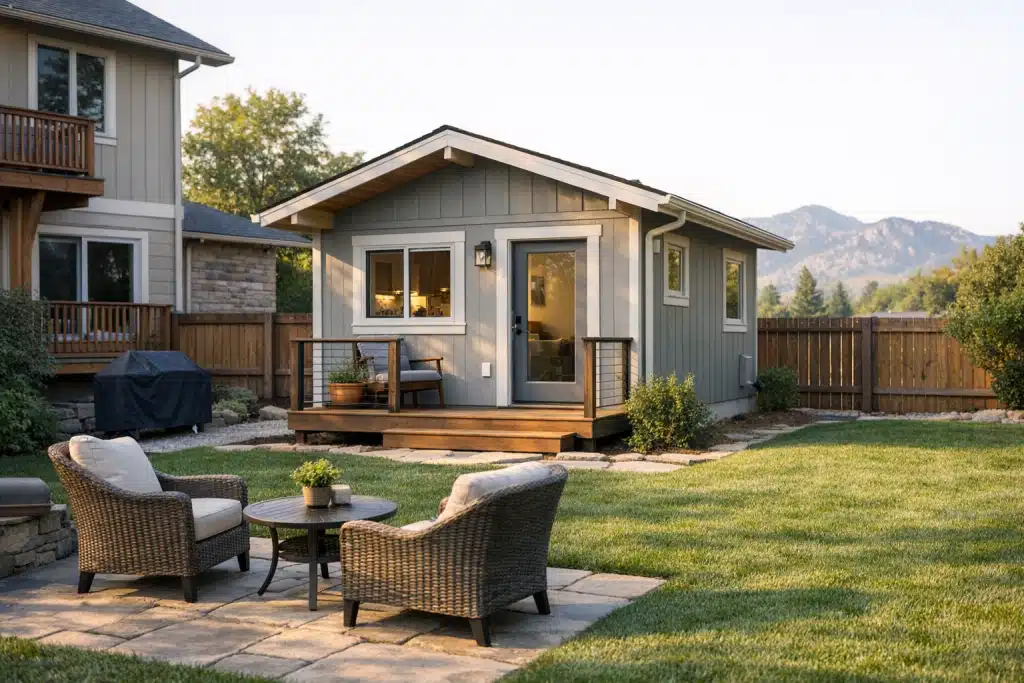
Conventional paths move slowly and lean on strict underwriting. Private and hard money paths move fast and lean on the property’s value. Below is how each one works for an ADU project.
Home Equity Line or Cash-Out Refinance
A HELOC or cash-out refinance pulls from equity you already built. Rates stay lower than private money. The tradeoff is speed and flexibility.
Banks want full documentation and often cap your combined loan-to-value near 80 percent. If your Denver home is worth $600,000 with a $300,000 mortgage, you might pull $180,000. That covers a modest detached unit but leaves little margin for cost overruns.
Renovation Loans
Fannie Mae HomeStyle and FHA 203(k) loans fund improvements based on after-improvement value. They can finance an ADU in some cases. The paperwork is heavy and approval timelines stretch past 60 days.
Accessory Dwelling Unit Hard Money and Private Construction Loans
An accessory dwelling unit hard money loan funds the build based on the project’s value, not just your personal income. This matters when a bank says no or moves too slowly for your contractor’s schedule.
Apex Money Lending Group funds ADU construction across Colorado’s Front Range. We lend against the as-completed value of the property with the finished unit. That lets homeowners and investors start building without waiting months for conventional approval.
Private construction financing fits owners who need draws tied to build milestones. Funds release as framing, mechanicals, and finishes complete. Your contractor stays paid and the project keeps moving.
How to Finance an ADU Build in Colorado: Step by Step
- Confirm your zoning. Check your city’s ADU rules under HB 24-1152. Denver and Boulder publish parcel-level zoning maps online.
- Get a build estimate. A licensed contractor should price the full scope, including utility connections and permit fees.
- Pull a rental comp. Estimate monthly rent for your area. Denver ADUs rent for $1,400 to $2,200 depending on size.
- Calculate as-completed value. An appraiser or lender projects what the property is worth once the unit is finished.
- Choose your loan. Match your timeline and equity to a HELOC, renovation loan, or private construction loan.
- Secure permits and close. Private lenders like Apex can close in days once documents and plans are ready.
- Draw funds by milestone. Release capital as each build phase passes inspection.
Real Numbers: A Denver Backyard Cottage
Here is a scenario we see routinely on the Front Range. A homeowner in Denver’s Berkeley neighborhood owns a property worth $650,000 with $250,000 owed. They want a 650-square-foot detached ADU.
- Build cost: $220,000 including permits and utility work
- Projected rent: $1,900 per month
- As-completed value: roughly $850,000 to $900,000
- Annual rental income: about $22,800 before expenses
A private construction loan covers the $220,000 build against that higher finished value. The owner later refinances into a conventional mortgage once the unit is rented. This two-step play keeps the project funded when a single bank loan stalls.
Cost Drivers That Change Your Loan Size
ADU budgets swing based on a handful of specifics. Knowing them upfront prevents a loan that falls short mid-build.
- Detached vs. attached: Detached cottages cost more than garage conversions
- Utility connections: Separate sewer and water taps add $10,000 to $30,000
- Site slope and access: Tight urban lots raise labor costs
- Finish level: Short-term rental finishes cost more than long-term units
- Permit and impact fees: Vary by city and can exceed $15,000
Why Speed Matters With ADU Projects
Construction timelines punish delay. Contractors book months out and material prices shift. A loan that takes 60 days to close can cost you your build slot.
Private lending closes fast because approval rests on the asset. Apex reviews the property, plans, and exit strategy rather than grinding through conventional income checks. That speed keeps your contractor on schedule and your rental income starting sooner.
Is an ADU Worth the Cost in Colorado?
For most Front Range homeowners, an ADU adds both monthly income and long-term property value. A unit renting at $1,900 per month generates meaningful cash flow against a fixed loan payment.
The added square footage raises your appraised value too. That equity gain gives you a refinance option down the road. Combined with the 2024 zoning changes, the math now works in more neighborhoods than ever.
Key Takeaways
Colorado’s HB 24-1152 made backyard rentals legal across most major cities, and financing is the final piece. ADU financing Colorado homeowners rely on ranges from HELOCs to private construction loans, with private money winning on speed. Apex Money Lending Group funds ADU construction against as-completed value, closing fast enough to protect your contractor timeline.
Ready to fund a backyard rental? Call or text Apex Money Lending Group at 720‑365‑4344, email info@apexmoneylending.com, or visit https://apexmoneylending.com to price your ADU build.
Sources
- Colorado General Assembly – HB24-1152 Accessory Dwelling Units
- City and County of Denver – Accessory Dwelling Units
- Fannie Mae – HomeStyle Renovation Mortgage
- U.S. Department of Housing and Urban Development – 203(k) Rehabilitation Mortgage Insurance

