
Outdoor Living Spaces: Financing Deck and Patio Additions for Summer Sales
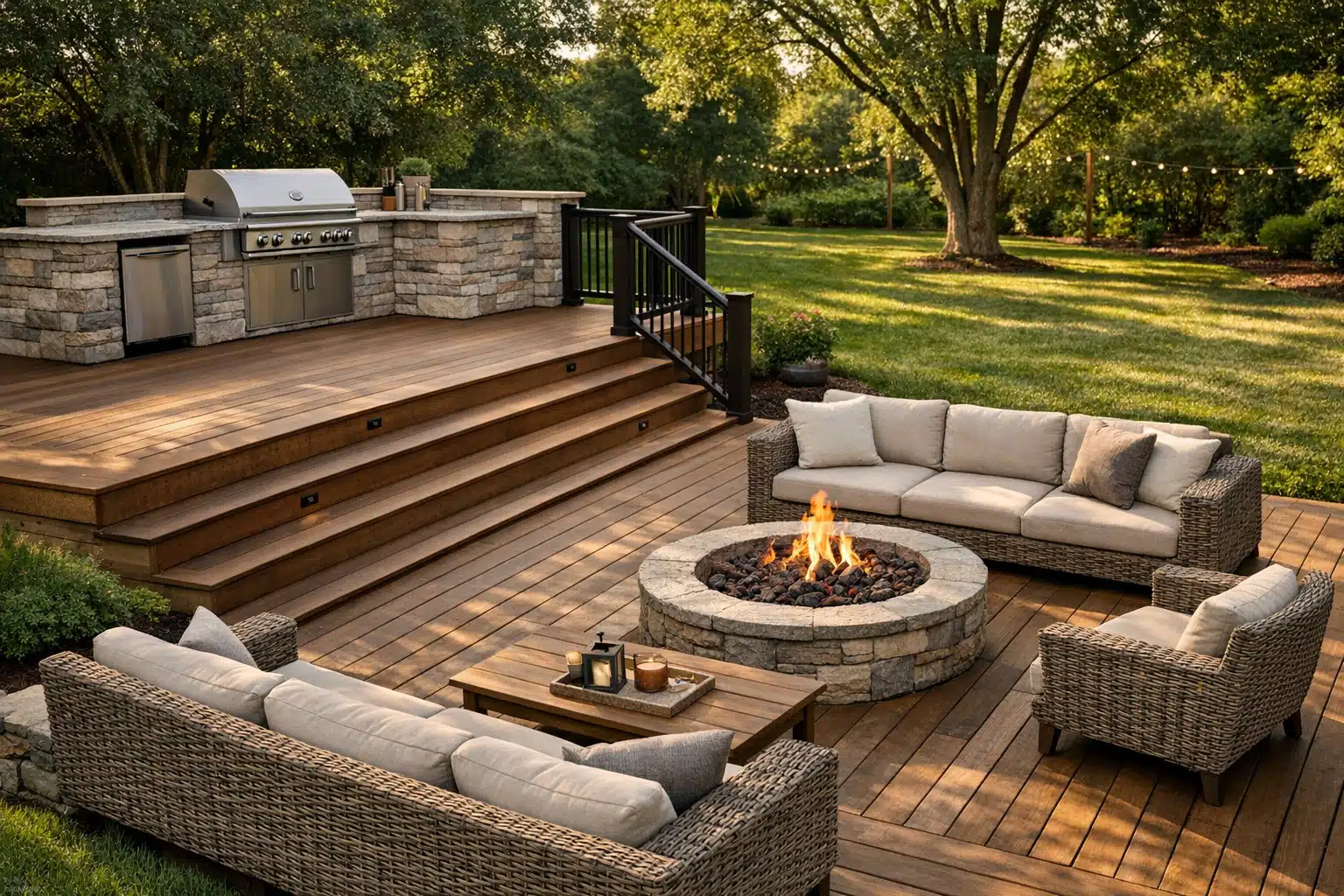
Outdoor living spaces significantly enhance a home's appeal during the summer selling season, making it vital for sellers to invest in decks and patios. Fast outdoor space financing allows sellers to complete these projects quickly, maximizing their return at closing.
- A well-built deck or patio can attract more buyers during summer open houses. Families envision outdoor gatherings, increasing the property's appeal.
- Sellers can use short-term financing to build outdoor features before listing their homes, ensuring they are ready for peak buyer traffic.
- It's crucial to align the budget with neighborhood standards to avoid overbuilding and ensure a good return on investment.
Outdoor space financing refers to the financial options available for homeowners to fund the construction or enhancement of outdoor living areas, such as decks and patios. This type of financing allows sellers to invest in these features quickly, increasing their property's appeal and potential resale value, especially during peak selling seasons.
A backyard deck can return more of its cost at resale than most interior remodels. That matters when summer buyers walk a property and imagine weekend cookouts before they read a single spec sheet. Outdoor space financing gives sellers the cash to build those features fast, ahead of peak listing season.
This post breaks down how deck and patio loans work, which projects move the needle for summer shoppers, and how to time the money against your sale.
Why Outdoor Spaces Sell Homes in Summer
Summer buyers shop with different eyes. A patio that looks flat in February photos becomes the reason someone writes an offer in July.
Warm-weather showings put outdoor areas front and center. Families picture kids in the yard. Couples picture dinner under string lights.
The seasonal preference is measurable. Homes with usable outdoor living areas draw more foot traffic during summer open houses.
What Summer Buyers Look For
- Covered patios that stay usable in afternoon heat
- Multi-level decks that separate cooking from lounging
- Built-in seating and fire features for evening use
- Outdoor kitchens with a grill, counter, and sink
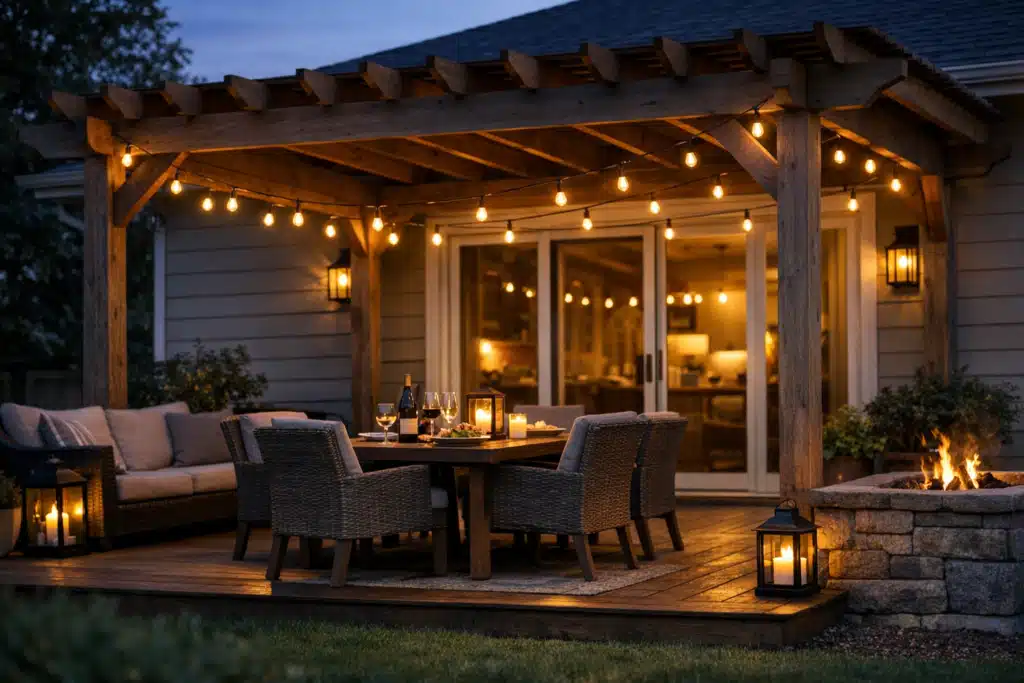
- Shade structures like pergolas and awnings
Each item answers a question buyers ask themselves: can I entertain here tomorrow? A finished space removes the guesswork.
Outdoor Space Financing: How It Works for Sellers
Outdoor space financing is short-term capital used to build decks, patios, and yard features before a home hits the market. Sellers borrow against the property, complete the work, then repay the loan from sale proceeds.
Hard money loans fit this timeline. They fund in days, not weeks, and lean on property value rather than long income reviews.
Traditional bank loans move too slowly for a spring build. A deck poured in April must be listed in May to catch peak buyer traffic.
Deck Patio Loans vs. Traditional Home Equity Products
Here is how the two compare for a seller on a tight clock:
- Speed: Hard money closes in 5–10 days. HELOCs run 30–45 days.
- Underwriting: Asset-based loans weigh property value. Bank loans weigh income and credit depth.
- Term: Deck patio loans run months, matched to a sale. Home equity lines stretch for years.
- Payoff: Short-term borrowers repay from closing. Traditional borrowers carry monthly payments.
For a seller planning to list, the short window and fast close matter more than the long-term rate.
Which Outdoor Projects Return the Most Before a Sale
Not every backyard dollar comes back at closing. The strongest returns come from projects buyers can use on day one.
Wood Deck Additions
A new wood deck recovers a large share of its cost at resale. It reads as added square footage that buyers can stand on during a showing.
A 16-by-20 pressure-treated deck runs roughly $8,000 to $16,000 installed. Financing that build in March means it photographs green and clean by June.
Concrete and Paver Patios
Patios cost less than decks and need little upkeep. A paver patio with a seating wall gives buyers a defined gathering spot.
Budget $3,000 to $10,000 for a mid-size paver install. The low maintenance pitch lands with buyers who do not want weekend chores.
Shade and Evening Features
Pergolas, string lighting, and fire pits stretch a yard into the evening hours. Summer buyers respond to spaces they can use after dinner.
These add-ons run a few thousand dollars but shape the emotional pull of a showing. They are the details buyers describe to friends after the tour.
Timing Your Build Against the Selling Season
The money and the calendar have to line up. A loan that funds in June wastes half the season.
Use this sequence to hit peak listing weeks:
- February–March: Apply for outdoor space financing and lock your build budget.
- March–April: Break ground while contractors have open schedules.
- April–May: Finish construction and stage the space with furniture.
- May–June: List with photos that show a finished, usable yard.
- Summer close: Repay the loan from sale proceeds.
Booking a contractor early also protects your price. Summer demand pushes labor costs up as the season peaks.
How Much to Borrow Without Overbuilding
Match your spend to your neighborhood, not your wish list. A $40,000 outdoor kitchen in a modest subdivision will not return at closing.
Anchor the budget to comparable sales nearby. Look at what buyers paid for homes with finished outdoor areas within a mile.
A working rule: keep outdoor improvement spending under 10% of the expected sale price. That range keeps the project aligned with buyer expectations.
Signs You Are Building for the Right Buyer
- Neighboring homes have similar decks or patios
- Local listings highlight outdoor entertaining space
- Your agent flags outdoor features as a demand driver
- The layout matches how buyers use the yard
When those signals point the same direction, the build tends to pay back at the closing table.
Costs, Rates, and Repayment on Deck Patio Loans
Hard money for outdoor work is priced on speed and property value. Rates run higher than bank loans, but the term is short.
Because the loan is repaid at sale, the total interest paid stays small. A four-month loan carries far less interest than a multi-year line.
What Lenders Review
- Property value: The after-improvement value supports the loan amount.
- Exit plan: A clear listing date and sale strategy.
- Scope of work: Contractor bids for the deck or patio.
- Timeline: How the build fits the selling season.
Bring bids and a target list date to your first call. That prep shortens approval and gets shovels in the ground sooner.
A Real-World Seller Scenario
A homeowner plans to list in June. The backyard has bare grass and a rotted step off the sliding door.
They borrow $22,000 in March. The money funds a two-level deck, a pergola, and string lighting.
Construction wraps in late April. Staged photos show a finished entertaining space, and the home draws competing offers in its first weekend.
The loan is repaid at closing. The seller kept upfront cash free for moving costs and the next down payment.
Common Mistakes That Cost Sellers Money
- Starting too late: A June build misses the strongest showing weeks.
- Overbuilding for the block: Features that outpace the neighborhood do not return.
- Skipping staging: An empty deck reads unfinished in photos.
- Ignoring shade: A sun-baked patio shows poorly in midday tours.
- Choosing slow financing: A 45-day bank close eats the season.
Each mistake trims the return on the improvement. Avoiding them keeps the project on the profitable side.
Key Takeaways
Outdoor living space drives summer offers because buyers shop with entertaining in mind. Fast outdoor space financing lets sellers build decks and patios in time for peak listing weeks. Match the budget to the neighborhood, time the build for spring, and repay at closing.
Apex Money Lending Group funds deck and patio projects with fast, asset-based lending built for a seller’s calendar. Call or text 720‑365‑4344, email info@apexmoneylending.com, or visit https://apexmoneylending.com to price your build.
Sources
- Remodeling Magazine – Cost vs. Value Report
- National Association of Realtors – Research and Statistics
- U.S. Department of Housing and Urban Development – Buying a Home

