
Winterizing Your Flip: Protecting a Vacant Rehab During Colorado’s Cold Months
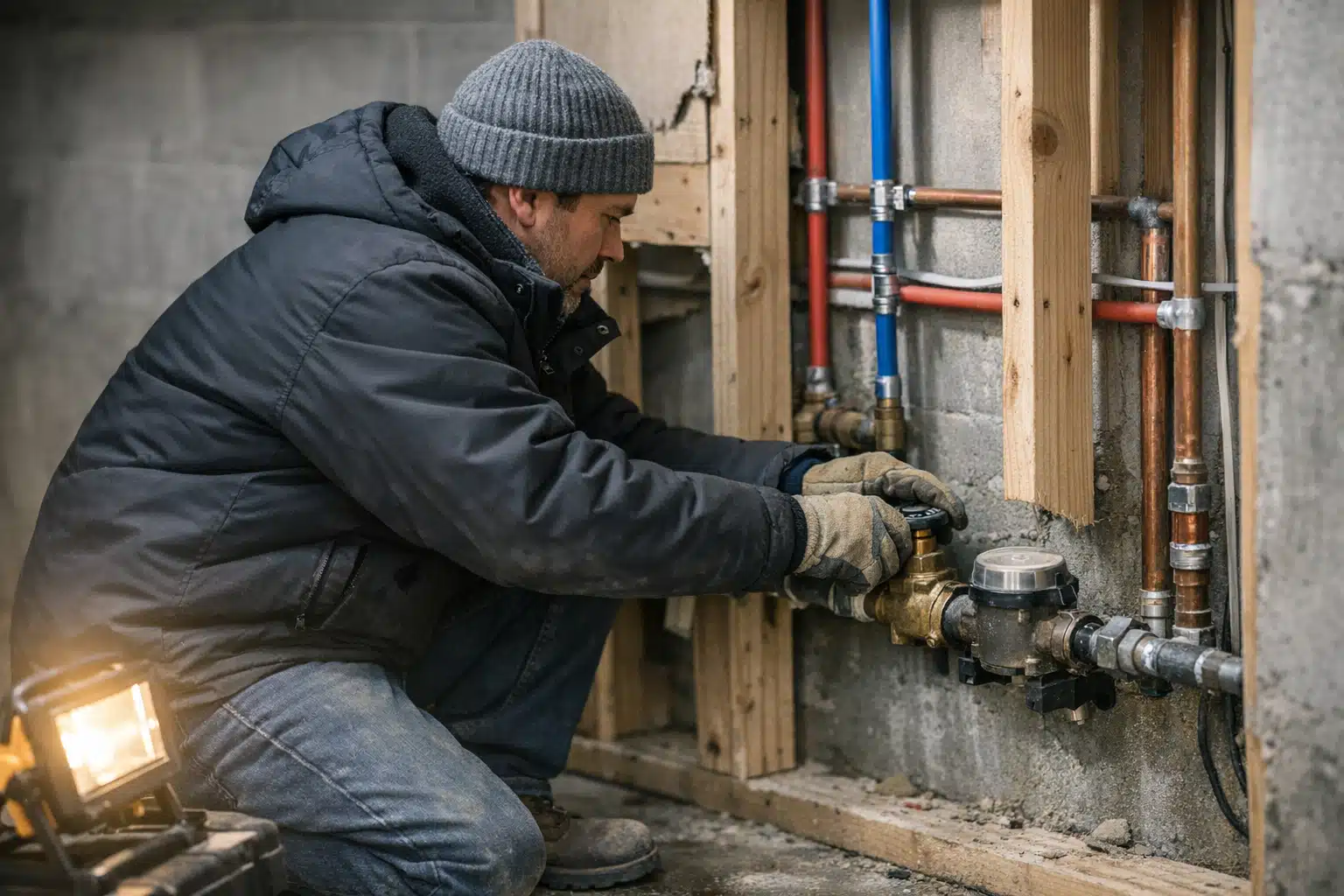
A single burst pipe can erase your rehab budget in one freezing night. For investors holding a hard money loan on a vacant project, that kind of damage does more than cost repair dollars. It stalls your resale timeline and keeps interest charges stacking up.
Winterizing a flip property in Colorado starts earlier than most people expect. The mid-fall window between late September and early November is when smart investors drain lines, lock in heat, and seal the building envelope. Below is what that work looks like on an unfinished rehab, step by step.
Why Mid-Fall Is the Real Deadline for Winterizing a Flip Property
Denver hits its first hard freeze around early October most years. Mountain-adjacent counties like Gilpin or Park see it weeks earlier. That first overnight dip below 32°F is when uninsulated copper and PEX start to fail.
Waiting until December is a mistake. By then you are reacting to damage, not preventing it. The investors who protect their margin treat vacant property winter protection as an October task, not a January emergency.
What Makes a Flip Different From an Occupied Home
An occupied house runs heat daily and catches small leaks fast. A vacant rehab sits dark for weeks with no one watching. Mid-demo plumbing, open wall cavities, and disconnected utilities multiply the risk.
- No daily occupant to notice a drip or a cold room.
- Open walls that expose pipes to exterior temperatures.
- Partial systems where heat or water may be half-connected.
Step One: Decide Between Draining the System or Holding Heat
You have two paths for a vacant flip. Each fits a different project stage and budget.
Option A: Full Water Drain-Down
Draining the system removes the water that freezes and bursts pipes. It fits projects where plumbing is roughed in but no finish work depends on running water over winter.
- Shut off the main water supply at the meter or curb stop.
- Open every faucet, tub, and hose bib to release pressure.
- Drain the water heater through its bottom valve.
- Flush all toilets and sponge out remaining tank water.
- Pour RV-grade antifreeze into every trap, toilet bowl, and floor drain.
The antifreeze step matters most. P-traps hold standing water that cracks porcelain and PVC when it freezes. Skipping this is the most common reason a “drained” house still floods in spring.
Option B: Maintain Minimum Heat
Holding heat fits active projects where crews work through winter or water stays connected. Set the thermostat no lower than 55°F. That margin covers cold snaps and protects pipes inside exterior walls.
Pair the heat with these safeguards:
- Open cabinet doors under sinks on exterior walls.
- Add a freeze-alarm sensor that texts you when temps drop.
- Keep the furnace serviced and the gas or power account active.
Step Two: Seal the Building Envelope Before the First Freeze
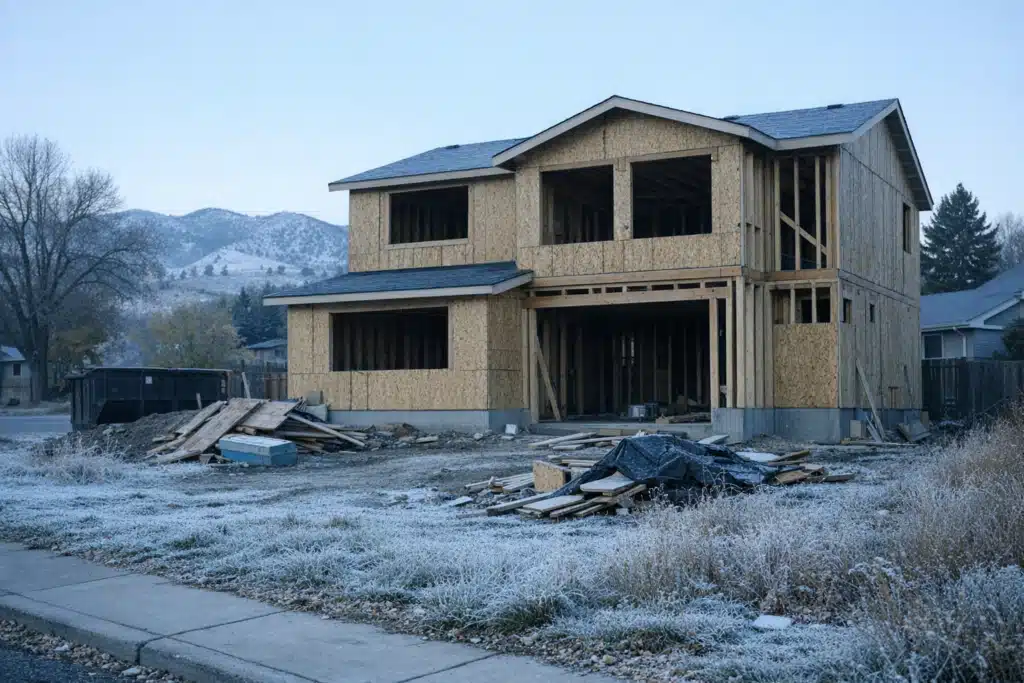
A half-finished flip leaks air everywhere. Open window rough-outs, missing doors, and unsealed penetrations let cold pour in. That cold reaches pipes faster than any thermostat can fight.
Close the gaps during your mid-fall walkthrough:
- Cover window and door openings with plywood or heavy plastic sheeting.
- Foam-seal penetrations where plumbing and wiring pass exterior walls.
- Insulate the attic hatch and any exposed rim joists in the basement.
- Disconnect exterior hoses and cap hose bibs with insulated covers.
Don’t Forget the Crawl Space
Crawl space pipes freeze before anything above grade in Colorado. Close foundation vents for the season. Add pipe-wrap insulation to any lines running below the floor.
Step Three: Protect Materials and Finishes Already On-Site
Freeze damage goes past plumbing. Paint, adhesives, grout, and joint compound degrade below their rated storage temperatures. A flip with $8,000 of staged materials can lose that inventory overnight.
- Move latex paint and adhesives indoors to a heated or insulated area.
- Keep drywall mud and grout off cold concrete floors where they absorb cold.
- Store flooring flat and climate-stable to avoid warping and gapping.
Mixing fresh mortar or grout near the freeze line is a wasted effort. It fails to cure and crumbles by spring. Time this work before the cold sets in.
How Freeze Damage Stalls Your Loan Payoff
A hard money loan carries interest every month you hold the property. Freeze damage adds weeks or months to your exit. That extra time eats directly into your profit.
Run the math on a stalled flip:
- A burst supply line can flood two floors in hours.
- Water remediation and re-rocking walls add four to six weeks.
- Each extra month of carrying costs compounds against your resale.
Preventing one freeze event protects both your repair budget and your payoff date. That is the real return on a weekend of winterizing work.
A Real Scenario From Colorado Winters
An investor leaves a Lakewood flip at 60% complete in November. The furnace trips a breaker during a two-week cold snap. Nobody checks the property. A second-floor line freezes, splits, and thaws into a ceiling collapse. The repair bill and three months of added interest wipe out the deal’s margin. A $40 freeze alarm would have caught it.
A Mid-Fall Winterizing Checklist for Vacant Rehabs
Run this list once before the first hard freeze. Repeat the walkthrough monthly until spring.
- Choose drain-down or minimum-heat based on project stage.
- Antifreeze every trap, toilet, and floor drain if draining.
- Set the thermostat at 55°F minimum if holding heat.
- Install a freeze alarm with text alerts.
- Seal all window and door openings.
- Insulate crawl space and basement pipes.
- Disconnect and cap exterior hose bibs.
- Move temperature-sensitive materials to a heated space.
- Confirm utility accounts stay active all season.
- Schedule a monthly in-person check.
Keep Your Flip and Your Timeline Protected
Winterizing a flip property is cheap insurance against a budget-ending freeze. Handle the drain-down or heat plan, seal the envelope, and protect your materials before the first hard freeze hits. That short mid-fall effort keeps your rehab on schedule and your loan payoff on track.
Apex Money Lending Group works with Colorado investors who hold projects across cold months and want financing that fits their timeline. Call or text us at 720‑365‑4344, email info@apexmoneylending.com, or visit https://apexmoneylending.com to talk through your next flip.

